Here's what we know about the unsolved mystery of who built Stonehenge

Stonehenge raises a simple but powerful question: who built it? The answer leads to ancient farmers, skilled planners, shared belief systems, and careful engineering. We break down the human story, the construction methods, the legends that followed, and the discoveries that reshape what we know.

Early theories and myths

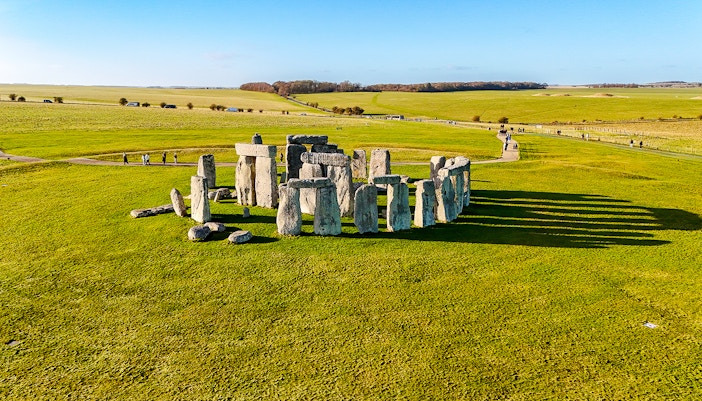
Aerial view of Stonehenge with surrounding green landscape in Wiltshire, England.
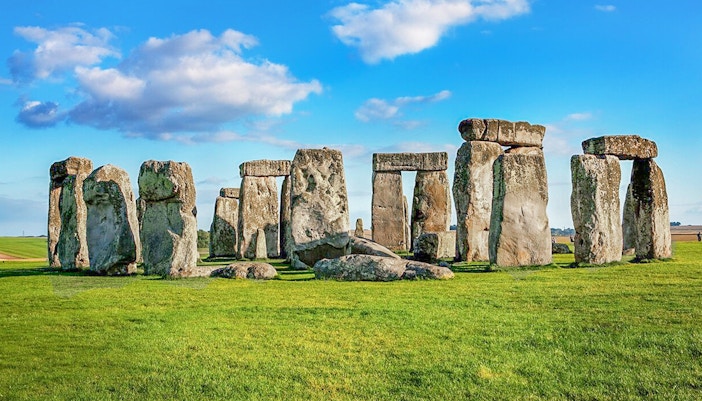
Heel Stone at Stonehenge standing in a grassy field under a cloudy sky.
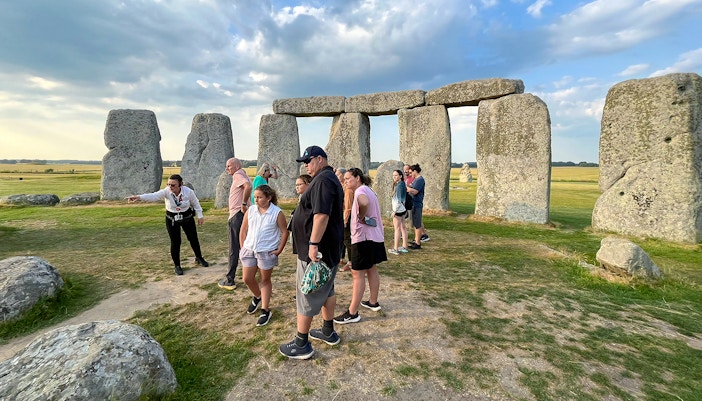
Visitors exploring Stonehenge in London, standing near ancient stone structures.
Aerial view of Stonehenge surrounded by green fields in Wiltshire, England.
Stonehenge stone circle at sunset in Wiltshire, England.
Ancient stone circle with visitors and countryside near Stonehenge, London.
Child and adult at Stonehenge with ancient stones in the background.
Visitors walking among Stonehenge stones during exclusive tour from London.
1/8

Merlin’s magic

In medieval stories, the wizard Merlin was said to move the stones from Ireland and raise Stonehenge in a single night. This legend shows how people once explained complex engineering through magic rather than practical skill.

Giants’ construction

Old tales imagined giants lifting the huge stones and placing them upright with ease. The size and weight of the blocks seemed beyond human strength, so storytellers filled the gap with powerful mythical beings.

Roman intervention

Some early historians believed the Romans built Stonehenge as a temple or astronomical site. Later excavations proved it was far older, but the theory shows how scholars linked mysterious ruins to known empires.

Druid theories

In the seventeenth and eighteenth centuries, writers claimed Druids built Stonehenge for ceremonies. Modern dating shows the monument predates the Druids by thousands of years, yet the idea shaped popular images of ancient Britain.

Alien assistance

Modern myths suggest aliens helped design or build Stonehenge, pointing to its scale and stone alignment. No scientific evidence supports this, but the theory reflects ongoing fascination with how such heavy stones were moved.

Ancient kings

Some legends claim a powerful king ordered Stonehenge built to show authority. While no named ruler is linked to it, this idea reflects how people often credit large monuments to strong leaders.

Healing powers

Medieval writers believed the stones had healing powers, and some sick people reportedly visited seeking cures. This belief likely grew from the monument’s age and mystery rather than any proven medical effect.

Celestial alignments

Stories claimed Stonehenge was built to speak with the heavens. The stones do align with the summer and winter solstices, which encouraged mystical ideas long before scientific study explained astronomical planning.
Archaeological findings on the builders 

  • Tools discovered: Excavations uncovered stone hammers, antler picks, and bone tools, showing builders shaped stones and dug foundations using simple but effective Neolithic technology.
  • Burial evidence: Burial mounds and cremated remains near the site suggest Stonehenge had a ritual role, linking its builders to ancestor worship and carefully planned ceremonies.
  • Stone origins: Geological analysis shows some bluestones came from the Preseli Hills in Wales, nearly 200 kilometers away, proving careful planning and coordinated long distance transport.
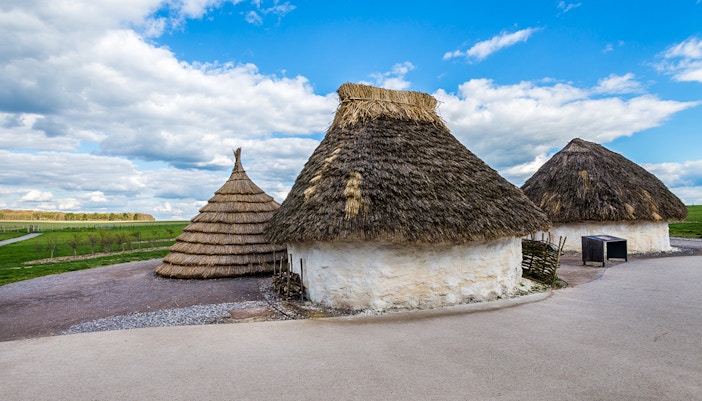
  • Settlement signs: Remains of nearby Neolithic houses and storage pits show settled communities lived close by, sharing labor, food, and organization needed for large construction.
  • Food remains: Animal bones, especially pigs and cattle, along with charred grain, suggest large seasonal feasts that brought workers together during key building phases.

Who were likely the builders?

Neolithic farmers

Early farmers in southern Britain likely organized labor to build Stonehenge. Their growing communities, shared resources, and cooperation over generations enabled construction of the massive stones with careful planning and skillful coordination.

Southern England tribes

Local tribes near Wiltshire may have contributed labor, knowledge, and resources. Stonehenge reflects the combined efforts of neighboring communities, demonstrating collaboration and shared cultural or ceremonial priorities.

Skilled stoneworkers

Some individuals specialized in shaping, transporting, and positioning megaliths. These experts applied remarkable precision, knowledge of materials, and problem-solving skills to achieve alignment and stability over centuries.

Ritual leaders

Community leaders likely directed labor for ceremonial purposes, aligning stones with astronomical events. Their guidance ensured collective effort met spiritual and social objectives while preserving traditions.

Interregional collaborators

Evidence suggests people from distant regions may have participated, sharing techniques and materials. Stonehenge likely represents a wider Neolithic network, with expertise exchanged across communities over generations.

Why was Stonehenge built?

  • Ceremonial center: Evidence suggests Stonehenge served as a hub for rituals, including ancestor worship, marking life transitions and community gatherings across generations.
  • Burial site: Excavated human remains point to funerary practices, showing the site’s sacred importance in commemorating and honoring the dead.
  • Astronomical observatory: Precise alignments with solstices indicate builders tracked celestial events, possibly for agricultural planning or religious timing of ceremonies.
  • Seasonal marker: Stone placement marks changing seasons, demonstrating the builders’ understanding of solar cycles and their integration into cultural practices.
  • Social cohesion: The construction effort likely strengthened community bonds, showcasing cooperation, shared labor, and a collective sense of purpose in monumental creation.
  • Cultural symbol: Stonehenge may have represented prestige, power, or identity, signaling a society capable of extraordinary architectural achievements.

Frequently asked questions about who built Stonehenge

Sarsen stones weigh up to 30 tons, showing remarkable effort and coordination to transport and position them precisely.