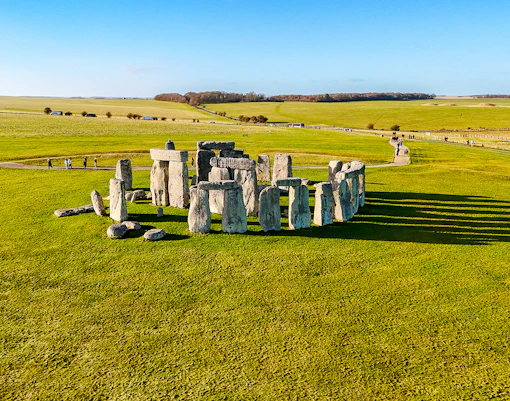
Stonehenge started as a circular earthwork with burial activity, not as the finished stone monument you see in photos. From the beginning, it was part of a wider sacred landscape on Salisbury Plain.
Stonehenge history and origins
Rising from the plain with eerie calm, Stonehenge began taking shape more than 4,500 years ago. Today, you can pair the stone circle with the visitor centre exhibition and approach path, then trace how ritual, engineering, and myth define the site.
Stonehenge timeline
- c. 3000 BC: First earthwork
A ditch and bank create Stonehenge’s earliest monumental ring. - c. 3000–2500 BC: Burial use
Cremation burials make it a major Neolithic ceremonial cemetery. - c. 2500 BC: Bluestones arrive
Smaller stones, likely from west Wales, are brought to the site. - c. 2500 BC: Sarsen circle raised
Massive stones and lintels form the famous silhouette. - c. 2500–2300 BC: Landscape alignment
The Avenue strengthens links to sunrise, sunset, and ceremony. - c. 1600 BC: Construction wanes
Major building phases end, though the site remains significant. - 1918: National donation
Cecil Chubb gives Stonehenge to the nation for protection. - 1986–2013: Modern recognition
UNESCO listing and a new visitor centre reshape how people experience the site.
Stonehenge’s history explained
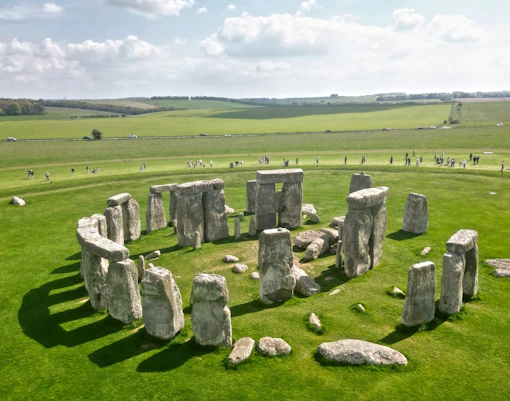
Ceremonial beginnings (c. 3000 BC)
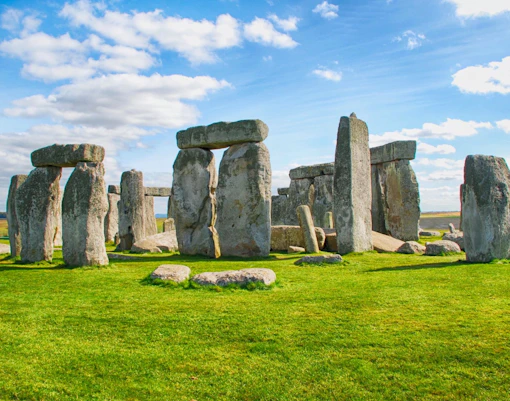
Engineering the icon (c. 2500 BC)
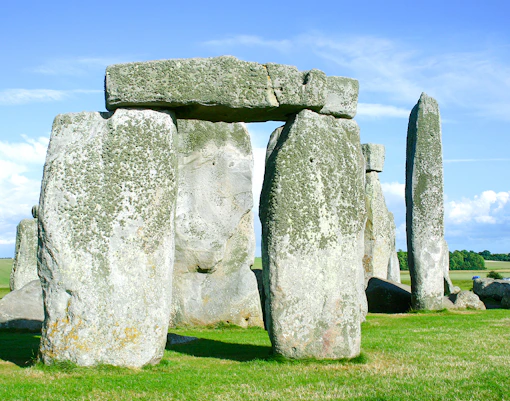
Builders brought bluestones from far away and raised giant sarsens with fitted lintels. This was not rough prehistoric building — it was careful planning, shaping, and alignment on a huge scale.
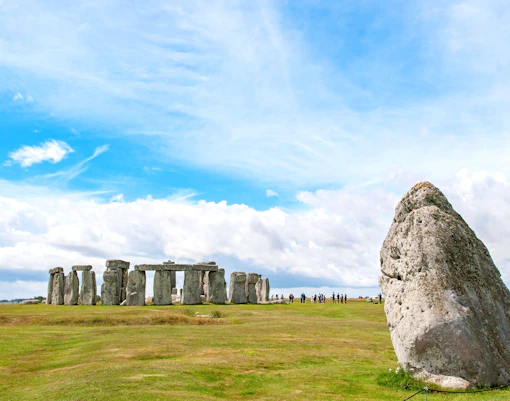
A monument in motion (c. 2500–1600 BC)
The layout kept changing as stones were moved and the surrounding ceremonial landscape developed. Stonehenge was not built in one burst, but through generations of reuse and reinterpretation.
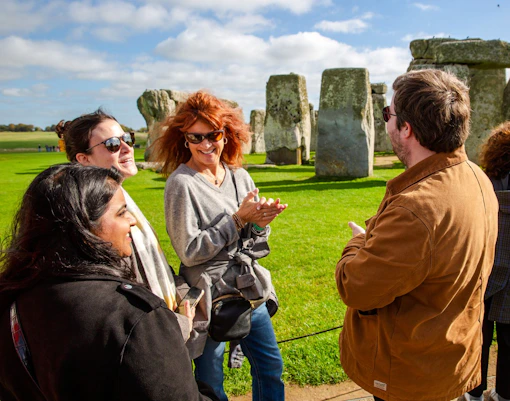
From ancient ruin to protected landmark (17th century–today)
Antiquarians, archaeologists, and conservators transformed Stonehenge from a weathered curiosity into one of Britain’s best-studied prehistoric sites. That long modern afterlife shapes the visitor experience almost as much as the stones themselves.
Construction and architecture of Stonehenge
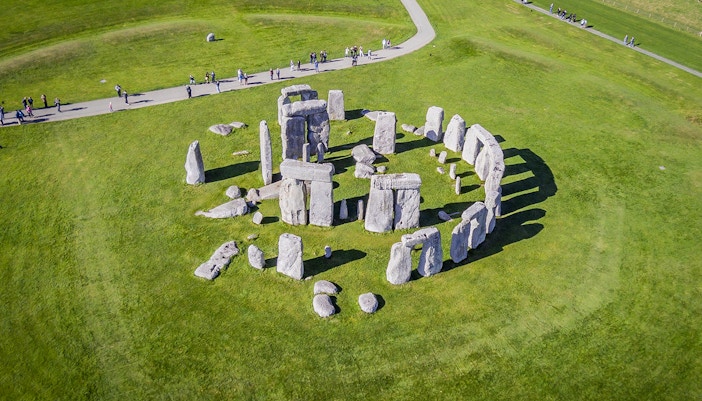
Built in stages between about 3000 BC and 1600 BC, Stonehenge combines earthworks, smaller bluestones from west Wales, and towering local sarsens from the Marlborough Downs. Its design is strikingly precise: the top lintels were shaped to lock onto the uprights with joints similar to woodworking. That careful geometry, plus the horseshoe and circular layout, is why the monument still feels so deliberate and powerful from the perimeter path.
Why was Stonehenge built?
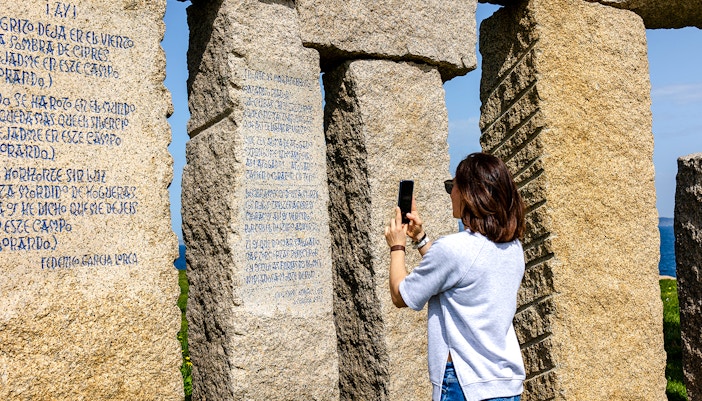
Burial and ritual site
Excavations have identified at least 150 cremation burials dating to the early phases of the monument. The concentration of human remains indicates sustained funerary activity, positioning Stonehenge as a significant ceremonial cemetery in Neolithic Britain.
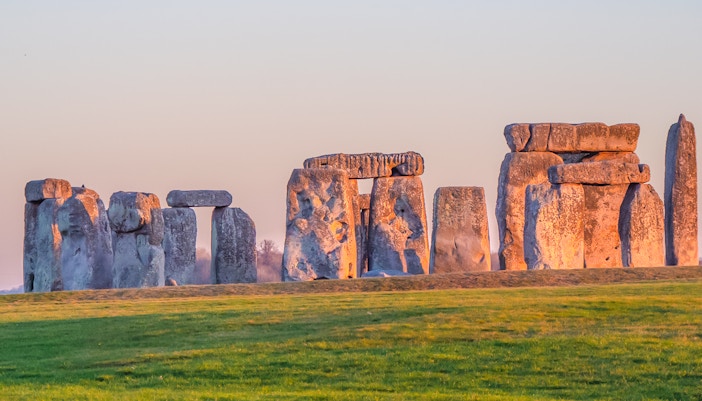
Astronomical alignment
The axis of the monument aligns precisely with the midsummer sunrise and midwinter sunset. These orientations suggest deliberate planning to track solar extremes, reinforcing seasonal observances central to agricultural and ceremonial calendars.
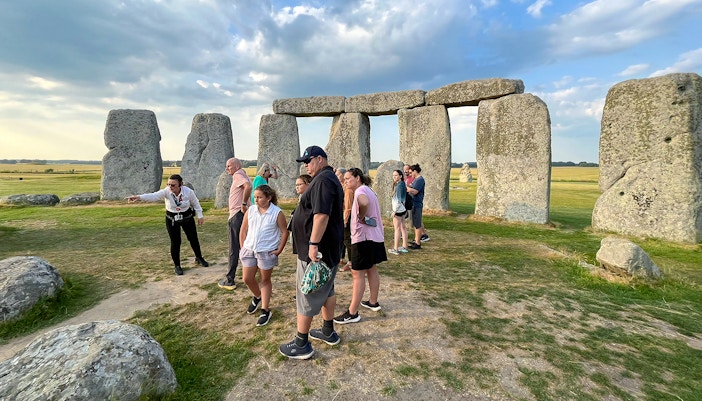
Healing centre
Isotope analysis reveals that some individuals buried nearby originated far from Salisbury Plain, including Wales. Combined with evidence of trauma and illness, this supports theories that Stonehenge attracted people seeking ritual or therapeutic intervention.
Symbol of unity
The transport of bluestones from southwest Wales and sarsens from the Marlborough Downs required coordinated labour across regions. Such logistical organisation implies cooperation between communities, possibly reinforcing alliances or shared cultural identity.
Ceremonial landscape
Stonehenge formed part of a broader prehistoric complex that included Durrington Walls and Woodhenge. Spatial relationships between these sites indicate planned processional routes and complementary ceremonial functions within an integrated ritual landscape.
Additional information about Stonehenge’s history
Although Stonehenge is often linked with Druids, the monument was already ancient by the time Iron Age Druids appeared. That myth reveals how every era has projected meaning onto the site. Modern archaeology points instead to a ceremonial landscape tied to burial, memory, movement, and seasonal alignment, which is why the wider plain matters as much as the stones.
Stonehenge today: Why it matters
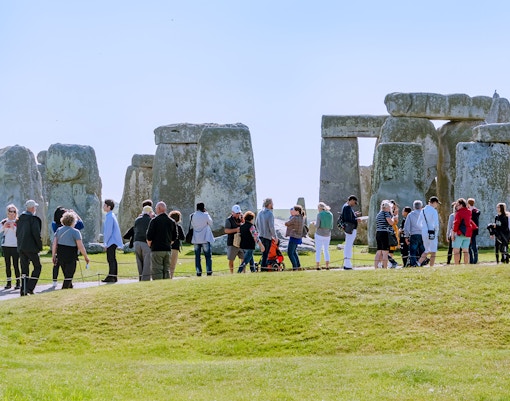
Today, Stonehenge is managed by English Heritage within the UNESCO-listed ‘Stonehenge, Avebury and Associated Sites’ landscape. You can explore the stone circle from the perimeter path, visit the exhibition, see reconstructed Neolithic houses, and choose the shuttle or walk across the plain. It still draws travellers because it is both visually iconic and historically unresolved — you see the monument clearly, but its full meaning remains debated.
Get more than a photo stop
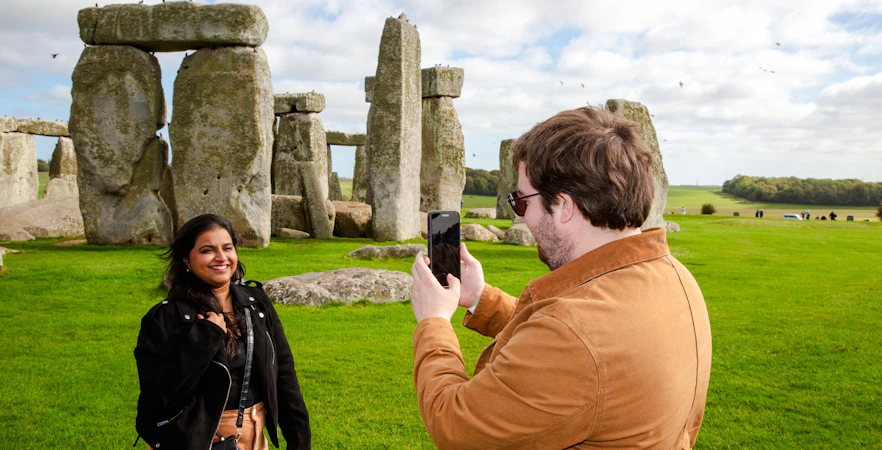
Join a guided Stonehenge tour for context on burials, solstice alignments, and how the circle was built, or choose inner-circle access for a rarer historical perspective.
Frequently asked questions about Stonehenge’s history
The earliest phase dates to around 3000 BC. The best-known stone settings were added around 2500 BC.
No single ruler or named architect is known. It was created by Neolithic communities over many centuries.
Its exact purpose is still debated. Evidence suggests ceremonial, burial, and seasonal functions.
No. Stonehenge predates Iron Age Druids by roughly 2,000 years, though modern Druids gather there for solstice events.
The giant sarsens likely came from the Marlborough Downs. The smaller bluestones were transported from west Wales.
No. Regular visits follow a managed perimeter path; inside access is limited to special formats such as the Stonehenge Inner Circle & Windsor tours.
The monument aligns closely with the midsummer sunrise and midwinter sunset. That suggests seasonal observation mattered to its builders.
No. It stands on Salisbury Plain in Wiltshire; London-based tours simply include transportation.
If Stonehenge is your main goal, a half-day trip is usually more focused. Combo tours cover more places, but give you less time at the monument.