Visit right at opening around 9:30am or after 3pm. Morning crowds head straight to the shuttle buses for the stone circle, leaving the houses quiet, spacious, and easier to explore alongside volunteer re-enactors.
Quick overview
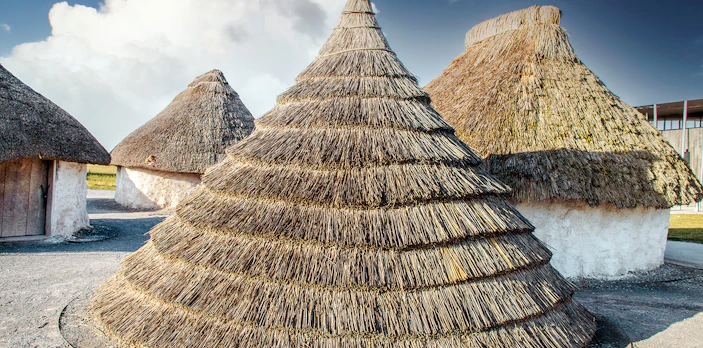
- Access: Included in all Stonehenge tickets (No separate ticket required)
- When you'll see it: Near the Visitor Centre at the start or end of your visit
- Visit duration: 20-30 mins self-guided/30-45 mins with guide or live demonstration
- Best time: First entry slot (9:30am–10:30am) or after 3pm
- Restrictions: No climbing on the structural framework. Non-flash photography allowed.

How to access the Neolithic Houses?
The Neolithic Houses are included with all Stonehenge tickets, and no separate ticket is needed. Located just outside the Visitor Centre, they are easily explored either immediately upon arrival or after taking the shuttle back from the stone circle. Book an advance timed-entry ticket to secure your entry slot and beat peak morning shuttle lines.
How to best experience Neolithic Houses
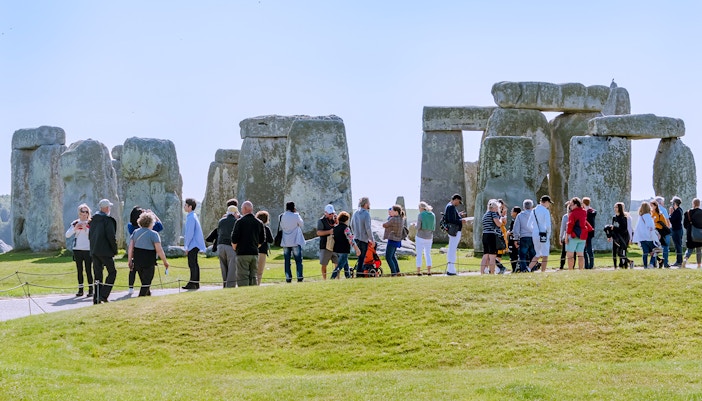
Best time to visit
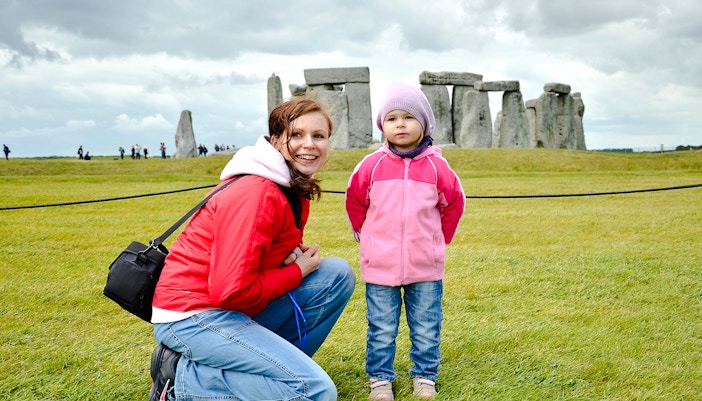
How long to spend
Allow 20 to 30 self-guided minutes to step inside each structure and inspect the hearths. If volunteers are actively demonstrating Neolithic flint-knapping or rope-making, budget 40 minutes to ask questions and see the crafts.

Where it fits in your itinerary
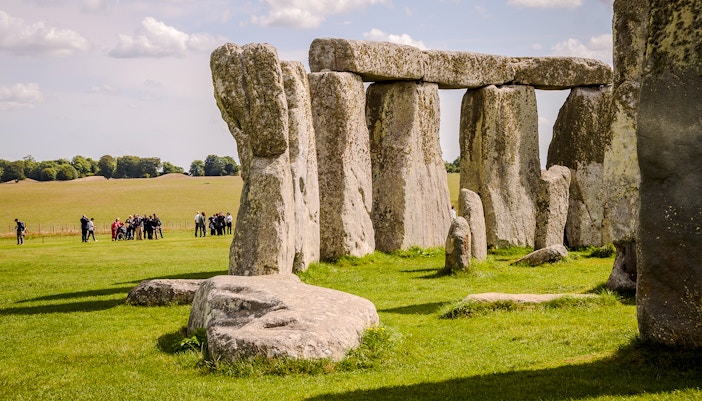
Positioned outdoors beside the Visitor Centre, these homes are best visited first to contextualise how the stone builders lived before taking the 10-minute shuttle ride out to the main megaliths.

Crowd patterns
Tour buses arrive heavily between 11am and 2:30pm, making the small 5m x 5m single-room house doorways congested. Off-peak hours offer direct access and better photos without crowd overlap.

What to prioritize if time is short
Step inside the central white-chalk room featuring the active central hearth, then locate the newly reconstructed Kusuma Neolithic Hall to observe the scaled square-in-circle timber roof framing.

Common mistakes to avoid
Many visitors take the shuttle directly to the stones and skip the outdoor houses entirely. Don't rush past to the bus line; exploring the houses gives vital physical context to the builders themselves.
Best tickets to experience Neolithic Houses
| Ticket type | Why choose it |
|---|---|
Standard timed-entry ticket | Secure guaranteed admission to the Visitor Centre, shuttle, stones, and Neolithic Houses with energy to spare. |
Guided tour ticket | Gain deep context from expert guides covering both the stone circle mysteries and daily Stone Age home life. |
VIP/Inner Circle access | Pair exclusive off-hours access to the megaliths with relaxed daytime exploration of the reconstructed dwellings. |
What are the Stonehenge Neolithic Houses?
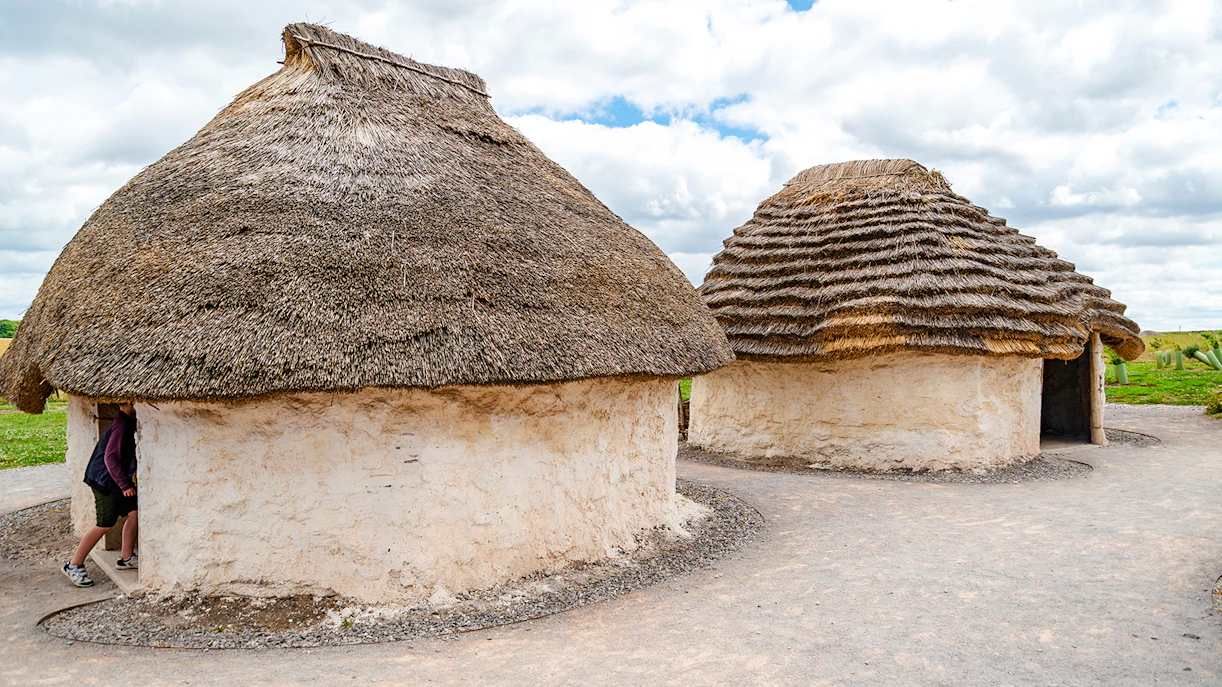
- Archaeology-based design: Each house is built using findings from Durrington Walls, just 2 miles from Stonehenge, where over 1,000 Neolithic house remains were uncovered.
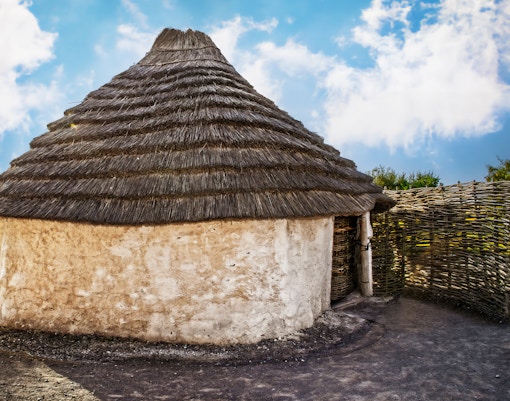
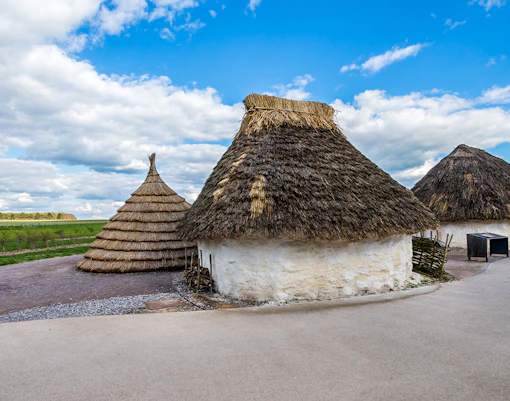
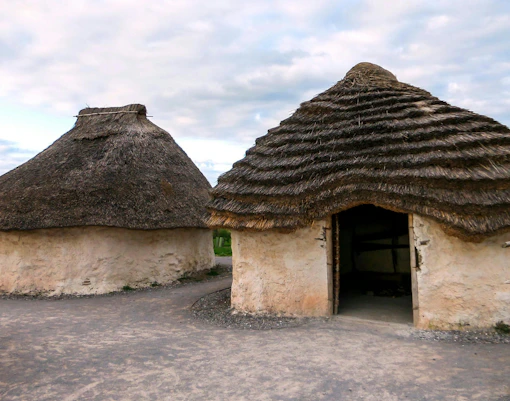
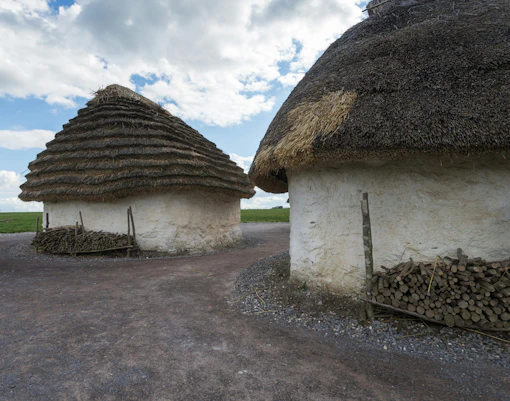
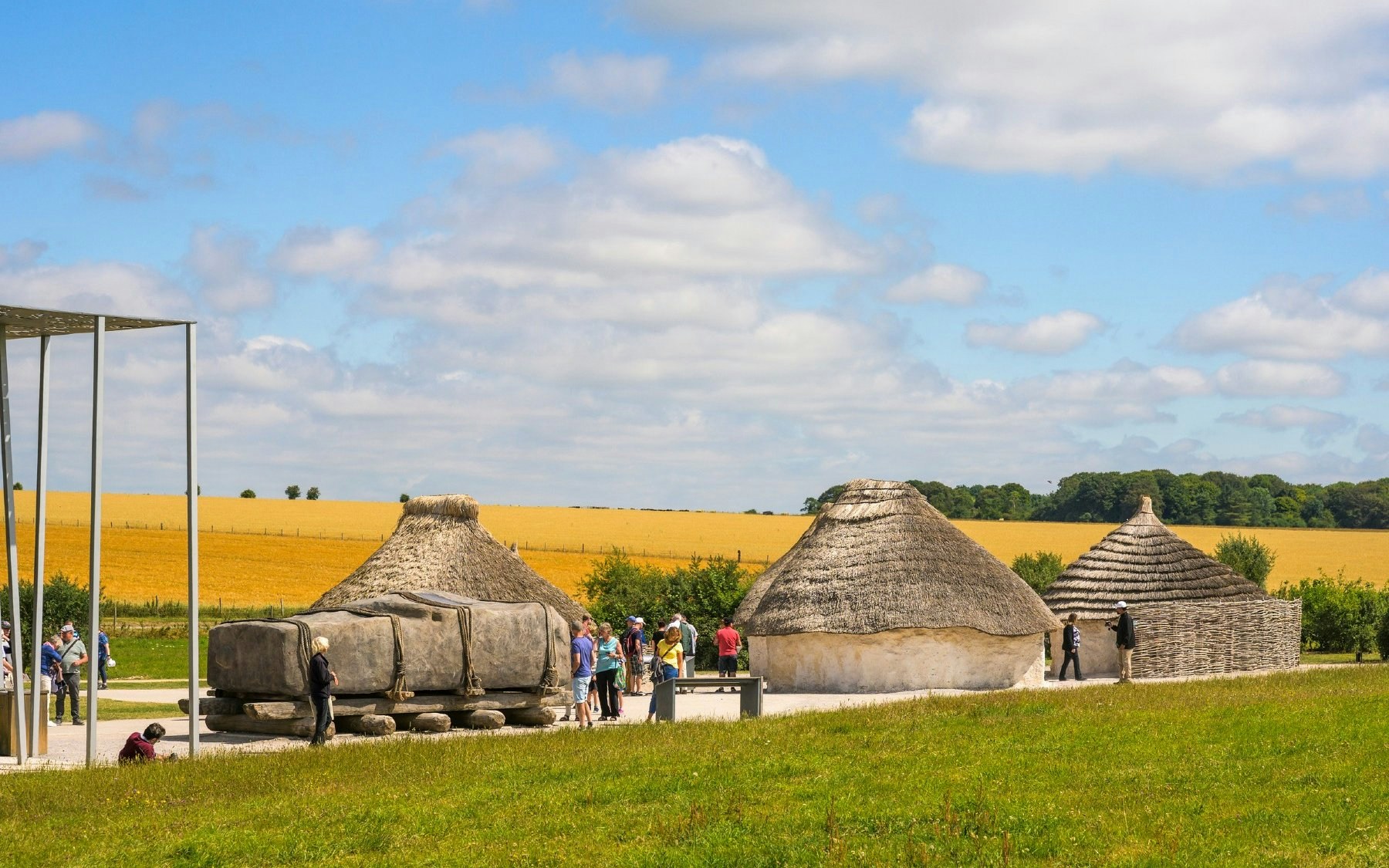
- Materials and structure: The walls are made of chalk and daub with thatched roofs. Wooden frameworks support the structure, mimicking construction methods used 4,500 years ago.
- Compact living space: Each roundhouse includes a central hearth, simple bedding, and storage areas, reflecting how closely families lived and worked in shared, multifunctional spaces.
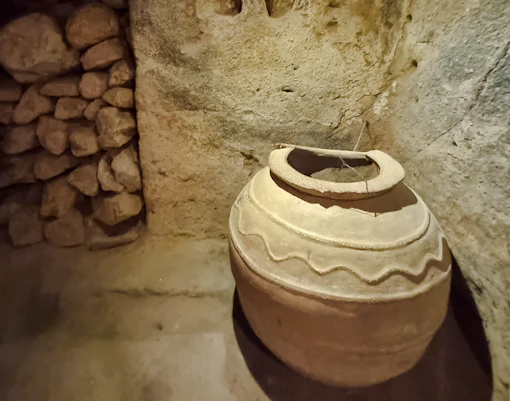
- Everyday Neolithic items: Interiors include clay pots, woven baskets, grinding stones, and flint tools, all based on authentic artefacts found during Neolithic site excavations.
- Layout and floor plan: The homes are circular with a single entrance and no windows. Layouts prioritised heat retention and used fire as the main light source.
- Inspired by Durrington: These reconstructions are directly influenced by the 2006–2007 excavations at Durrington Walls, believed to be a settlement for Stonehenge’s builders during peak construction.
Why it's worth seeing
The reconstructed Neolithic houses represent the only place in the world where you can stand inside the exact residential architecture of the people who built Stonehenge. Based on 4,500-year-old archaeological remains uncovered at nearby Durrington Walls, their crushed-chalk interiors reflect ambient hearth light, creating a bright, warm living space that upends modern assumptions about dark, primitive Stone Age living.

Walls and roof materials
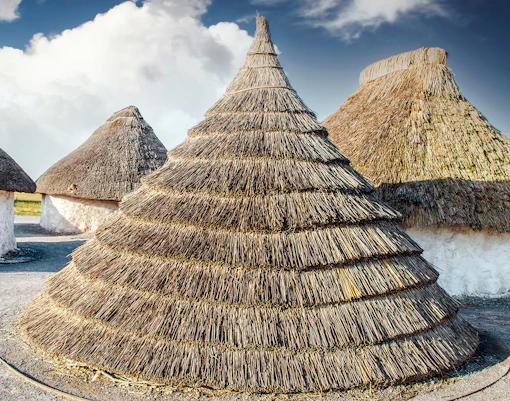
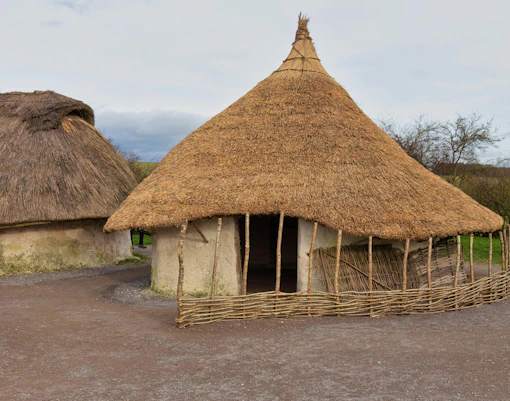
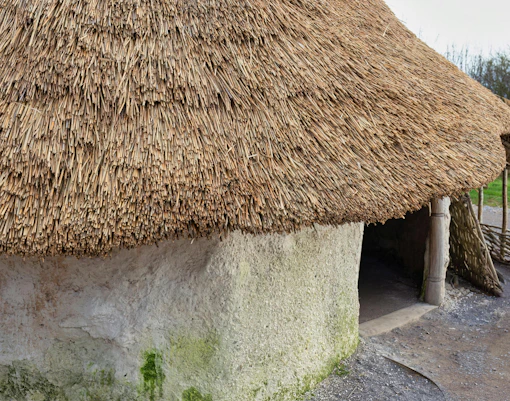
The walls are built using woven hazel rods coated in chalk daub, which brightens the space inside. Thatched roofs made from wheat straw insulate and ventilate the house. Every part of the structure shows ancient building skills using only local materials.

Hearth and fire area
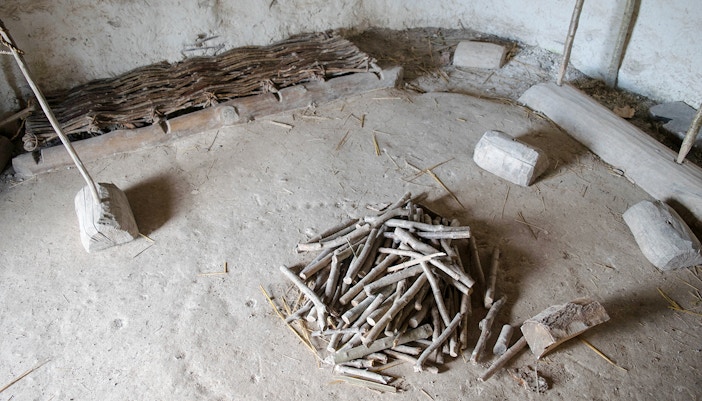
At the centre of each house is a hearth where fires were used for cooking and warmth. Smoke rose through the thatched roof, while chalk walls reflected light and heat, keeping the space bright and surprisingly comfortable despite the open flame.

The Kusuma Neolithic Hall
A 7-metre-high replica of a timber hall structure based on the Durrington 68 excavation. Examine the intricate rawhide lashings and heavy timber joints engineered without a single metal nail.

Beds and sleeping setup
The beds are made from tree trunks and topped with sticks, covered in animal skins for warmth. Raised off the floor to keep out the chill, these beds show how Neolithic families rested together, creating warmth, safety, and a strong social bond.

Storage and simple furniture
Lining the walls are shelves, benches, and woven baskets made from wood and natural fibres. Replica pottery, wooden bowls, and leather bags give insight into how early households stored food, tools, and clothing in small, tidy, and very practical spaces.

Everyday tools and utensils
Stone axes, flint knives, clay pots, and quern stones are scattered inside the houses. These tools, made using traditional methods, show how people cooked, made clothes, and prepared food, offering a close-up view of everyday tasks 4,500 years ago.

Clothing and daily objects

Look around and you’ll spot animal hide cloaks, arrow quivers, and bundles of rope made from plant fibres. These handmade objects reveal the survival skills of Neolithic people and help bring the clothing, hunting gear, and domestic routines of the past to life.

The volunteers
Volunteers demonstrate Neolithic skills like flint knapping, weaving, and food preparation using replica tools and natural materials. You can watch closely, ask questions, and occasionally try simple tasks to understand how everyday life worked in prehistoric times.
Historical & cultural significance
Excavated between 2006 and 2007 at Durrington Walls, the original house footprints revealed chalk floors, central hearths, and postholes dating to around 2,500 BC, matching the exact era when the main sarsen stones were raised. Rebuilt using authentic prehistoric tools, hazel timber, and wheat thatch, these dwellings showcase seasonal worker housing and community gatherings during ancient monument construction.
How were the houses rebuilt?
- Research and design: Archaeologists based the house designs on findings at Durrington Walls, using evidence of layouts, materials, and construction methods from around 2,500 BCE.
- Experimental prototypes: Prototype houses were tested at Old Sarum by volunteers using ancient tools, helping the team refine techniques before building at the Stonehenge site.
- Framework construction: Hazel stakes were driven into the ground and interwoven with horizontal hazel rods, forming strong, flexible walls similar to traditional hurdle fencing.
- Wall daub application: Walls were coated with daub made from chalk, straw, and water. This white finish brightened interiors and offered insulation against cold and wind.
- Thatching the roofs: Wheat straw was tied onto a hazel frame to form thatched roofs. Different styles were used since the original Neolithic roof designs remain uncertain.
- Interior setup: Beds, shelves, and hearths were handmade by volunteers using traditional tools and materials, replicating the basic comforts of Neolithic domestic life.
- Finishing details: Each house was styled with replica tools, clothing, and furnishings, helping visitors imagine how early builders of Stonehenge may have lived day-to-day.
Notable figures
Mike Parker Pearson
Lead archaeologist of the Stonehenge Riverside Project whose excavations at Durrington Walls discovered the original Neolithic house footprints.
English Heritage Experimental Builders
The team of modern archaeologists and 80+ volunteers who spent months building the authentic replicas using prehistoric methods.
Know before you go
- Open daily alongside Visitor Centre operating hours (typically 9:30am to 5pm or 7pm seasonally).
- Last access to the outdoor house area is 30 minutes before site closure.
- Operating schedule matches general site opening; closed on December 25th.
- Included with standard timed-entry admission tickets.
- Situated directly behind the main Stonehenge Visitor Centre in Amesbury, Wiltshire.
- Accessible on foot from the main entrance plaza before boarding the stone circle shuttle.
- Distance from the main stones: Approximately 1.5 miles (2.4 km); connected via shuttle bus or walking trail.
- No independent entrance exists; visitors must pass through the main Visitor Centre admissions desk.
- Paths surrounding the reconstructed houses consist of compacted gravel and natural turf.
- Doorways and thresholds are ground-level, allowing manual and powered wheelchair access inside.
- Volunteers on site assist visitors needing physical navigation guidance around the house perimeters.
- Accessible restrooms and parking facilities are available within the Visitor Centre.
- Non-flash photography and personal videography are permitted inside and around all houses.
- Do not pull, climb, or lean heavily on hazel wattle walls or thatched roofing materials.
- Outdoor fires inside hearths are managed strictly by trained staff; do not touch open embers.
- Dogs on short leads are permitted in the outdoor house display area.
Visitor tips
- Visit early morning: Arrive in the morning to see volunteer demonstrations. They usually occur more frequently earlier in the day when the site is quieter and easier to explore.
- Check for demonstrations: Ask staff near the houses if any hands-on demonstrations are scheduled; they’re not always listed, but may happen informally based on visitor interest.
- Handling replicas: Touching is allowed on some replica items, like quern stones or building materials, but always ask a guide before handling anything on display.
- Question for kids: If visiting with kids, bring questions to ask volunteers. Many are trained to give tailored explanations suited for younger or curious audiences.
- Observe ventilation design: Visit on a windy day and you’ll notice how the thatched roofs channel air—part of their natural ventilation design used thousands of years ago.
- Capture changing light: Take a photo of the house exteriors in changing light as the chalk daub reflects sunlight differently depending on the time of day.
- Indoor photography tips: If you’re into photography, wide-angle shots work best inside due to the tight space and low lighting around the hearths.
Frequently asked questions about Stonehenge Neolithic Houses
Yes. Entry to the outdoor reconstructed houses is included with every valid Stonehenge admission ticket. No extra fee or separate ticket is required.
No. Standard timed-entry tickets, member passes, and guided tour tickets all grant full access to the outdoor houses and the Visitor Centre.
No. The houses are located within the paid perimeter of the Stonehenge Visitor Centre. You must hold a valid site ticket to access them.
They are located right beside the Visitor Centre. You can walk through them before taking the shuttle to the stones or right before exiting.
Plan for 20 to 30 minutes. This provides enough time to step inside the structures, view the hearths, and chat with historical reenactors.
Yes. The surrounding ground is flat, compacted gravel, and house entrances feature step-free ground clearance for wheelchairs.
Yes. Visitors can fully step inside the 5m x 5m single-room houses to view the interior hearths, beds, and chalk walls.
Yes. Volunteers and staff frequently stand inside or outside the houses to demonstrate Stone Age skills like flint-knapping and answer questions.