Stonehenge

Plan your visit to Stonehenge from London

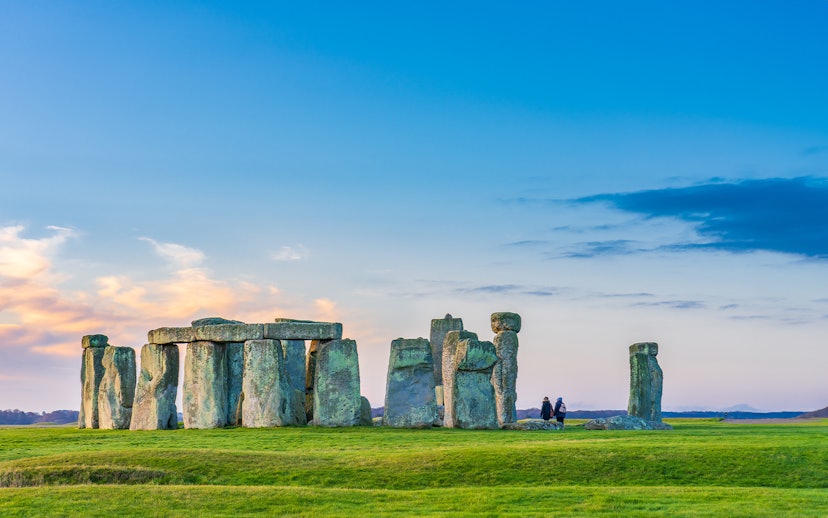
Stonehenge is a prehistoric stone circle best known for its scale, mystery, and open landscape setting on Salisbury Plain. The visit is more staged than many first-time visitors expect: you start at a separate visitor centre, then take a shuttle or walk out to the stones before following the perimeter path. That means timing matters as much as the monument itself. This guide covers the route, timings, and the best way to plan your day.

Quick overview: Stonehenge at a glance

A Stonehenge visit is straightforward once you understand the layout, but it rewards realistic timing more than last-minute spontaneity.

  • When to visit: Stonehenge is open daily on a timed-entry basis with seasonal hours; the first slots on shoulder-season and winter weekdays are noticeably calmer than late morning in July-September, when London coach arrivals bunch up, and the shuttle/approach feels busier.
  • Getting in: Standard timed entry is the baseline option, while premium inner-circle access and London-origin guided tours cost more because they add transport or rarer access; book ahead if you want a specific day and time, because prebooking is the only way to guarantee your preferred slot.
  • How long to allow: 1.5-2 hours works for most visitors, but give yourself closer to 2.5 hours if you want the exhibition, Neolithic Houses, or the full walk instead of relying only on the shuttle.
  • What most people miss: The Neolithic Houses and the visitor centre exhibition add the context the monument field itself does not, and the walk across the plain changes the emotional buildup more than most people expect.
  • Is a guide worth it? A guide adds real value on London day trips and premium access visits, but for a standard independent visit the free audio guide usually gives you enough context for less. All guided tour options

🎟️ Slots for Stonehenge sell out days in advance during summer weekends and bank holidays. Lock in your visit before the time you want is gone. See ticket options

Jump to what you need

Where and when to go

Walking one way changes the visit more than most people expect

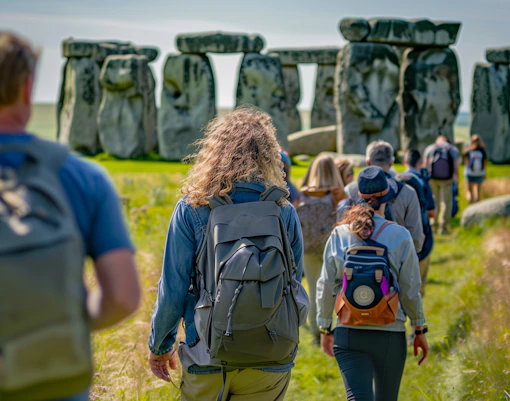
If the weather is good and you have the time, walk out to the stones at least one way instead of relying only on the shuttle. The approach across the plain feels slower, quieter, and far less bunched than arriving with a full shuttle unload.

Weather & what to expect year-round

Stonehenge sits on Salisbury Plain, an exposed landscape where wind, changing temperatures, and sudden rain can impact your visit. Preparing for the conditions helps ensure a smoother, more comfortable experience.

Key tips:

  • Dress for exposure: The open landscape makes wind more noticeable, dropping the feel-like temperature by 5–7°C. A lightweight windproof/waterproof jacket works better than an umbrella.
  • Wear sturdy footwear: Choose closed-toe shoes with solid grip for wet grass and uneven gravel paths.
  • Time your arrival: Late morning to early afternoon offers the clearest conditions, giving early morning fog time to lift in cooler months.
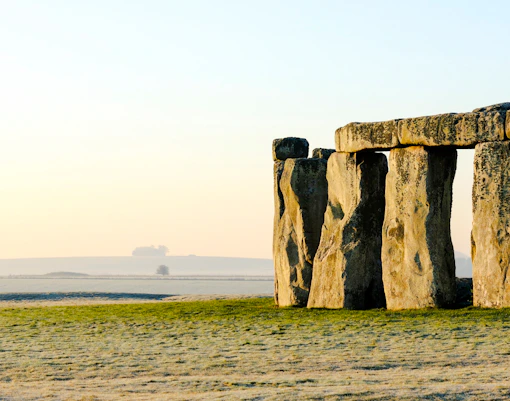
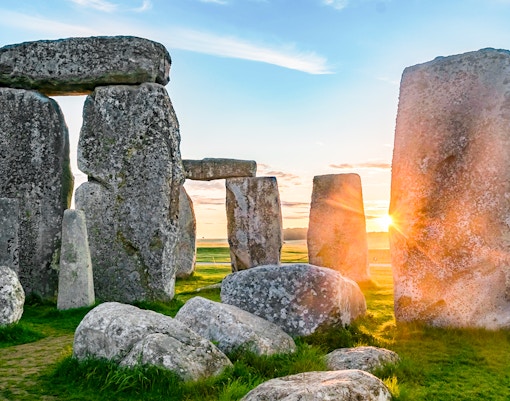
  • Photo lighting: Late May through July provides the best daylight, while autumn/winter mornings offer a dramatic, foggy atmosphere. Avoid high wind days if using light camera equipment.
  • Local forecasts: Check forecasts for Amesbury rather than London or Salisbury for the most accurate local conditions.

How much time do you need?

Visit typeRouteDurationWalking distanceWhat you get

Highlights only

Shuttle from Visitor Centre → Stone Circle path → Shuttle back

1–1.5 hrs

~1 km

A quick walk along the circular path around the stones. Skips the exhibition and landscape walking trails.

Balanced visit

Visitor Centre museum & Neolithic houses → Shuttle → Stone Circle → Shuttle back

2–2.5 hrs

~1.5 km

Includes the 250+ ancient artifacts at the museum, reconstructed houses, and a full loop around the stones.

Full exploration

Visitor Centre → Walk via Avenue & Cursus Barrows → Stone Circle → Walk back

3.5–4 hrs

~4–5 km

A complete hike through the prehistoric landscape and barrow mounds. Requires solid walking stamina.

How long do you need at Stonehenge?

You'll need around 1.5 to 2 hours to cover the visitor centre, the shuttle or walk out to the monument, the perimeter path, and the return. Give yourself closer to 2.5 hours if you want the exhibition, the Neolithic Houses, or a full landscape walk. Don't budget only for the stones themselves, because the transfer in and out is part of the experience.

Which Stonehenge ticket is best for you

Ticket typeWhat's includedBest forPrice range
Standard timed entry

Site entry via timed slot + shuttle access + Visitor Centre exhibitions & Neolithic Houses + audio guide app

Independent visitors, drivers, or rail travellers making their own way to Salisbury Plain

£27.20

Inner Circle tour

Stonehenge entry + exclusive Inner Circle access + expert English-speaking guide + round-trip AC coach + optional Windsor Castle upgrade

A once-only trip where standard perimeter viewing may feel too distant and you want the one upgrade that genuinely changes access depth

£189

Half-day trip

Entry to Stonehenge + access to visitor centre exhibitions + round-trip coach from Central London + Wi-Fi and USB charging

A London stay where you want Stonehenge done efficiently without turning the whole day into a multi-stop coach circuit

£36.80

Stonehenge tickets with flexible train transfers

Entry to Stonehenge + flexible round-trip rail tickets between London Waterloo and Salisbury + flexibility to explore Salisbury at your own pace

Travellers wanting speed and flexible schedules via rail, with freedom to explore Salisbury town before/after visiting the stones

£36.75

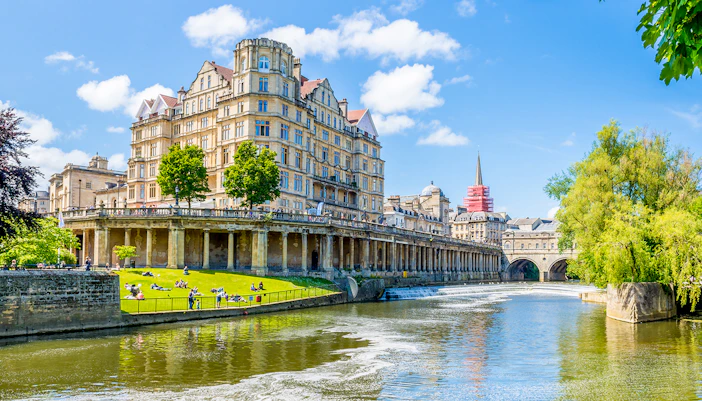
Stonehenge and Windsor/Bath Day Trip

Stonehenge and Windsor/Bath day tour + expert guide + round-trip AC coach + interactive audio guide + headset + free time in Bath/Windsor

A same-day plan where you want transport handled and are comfortable trading slower Stonehenge pacing for a second major stop

£110

3-attraction day trip

Full-day tour + round-trip coach + expert guide + walking tour of Oxford/Bath + headset + optional attraction entries by variant

A high-efficiency day where the priority is covering several icons with one booking rather than maximizing time at any single site

£71.10

Some London tour listings make Stonehenge look deeper than it is

⚠️ Watch out for unofficial sellers. Some resold Stonehenge products are really tightly timed coach stops packaged as full site visits. Buy only through the official site or a verified partner — the wrong ticket can still leave you on the busiest shuttle cycle anyway, with no recourse.

How do you get around Stonehenge?

What can you see at Stonehenge?
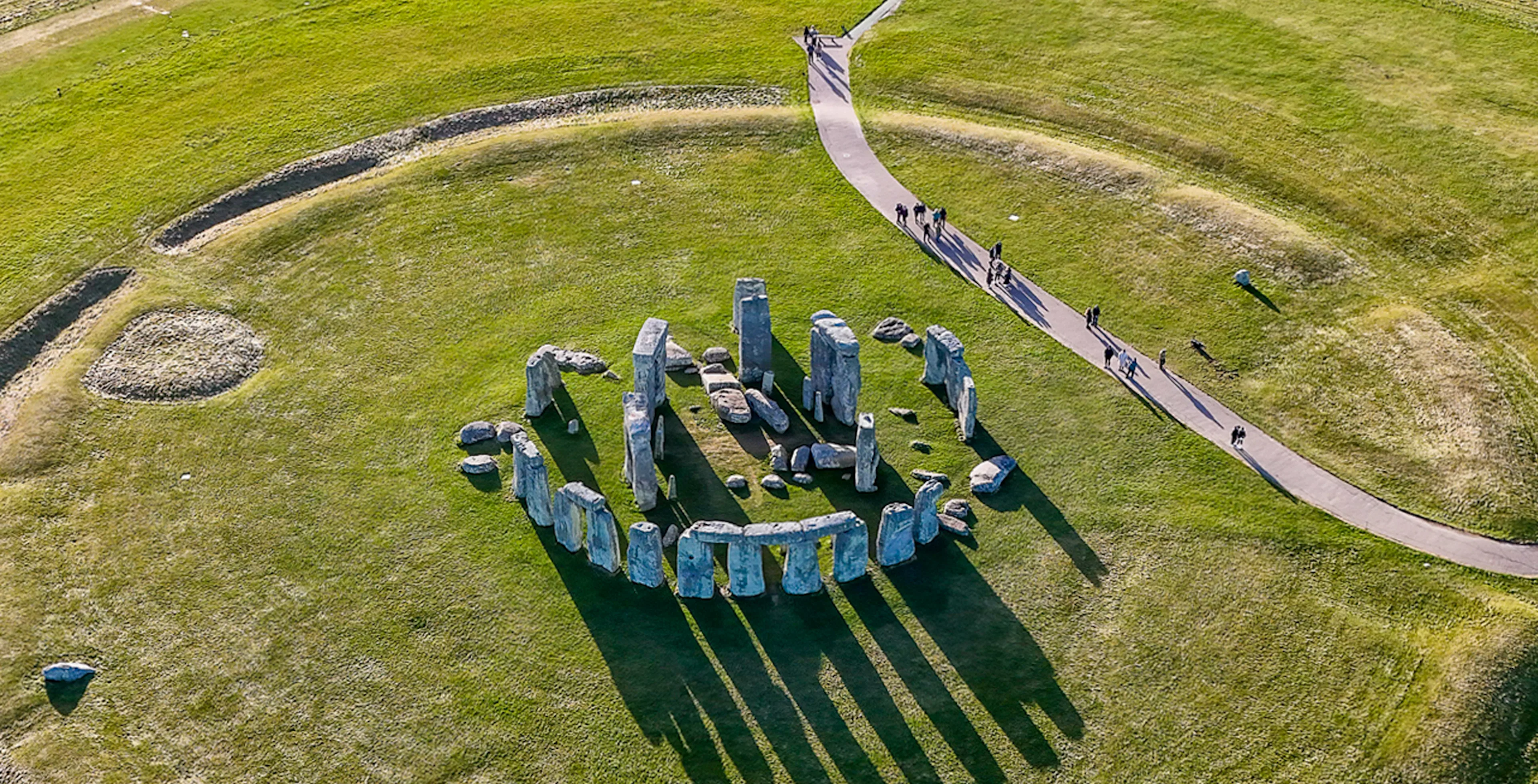
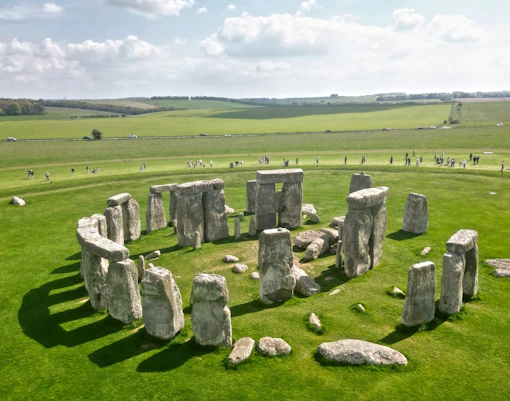
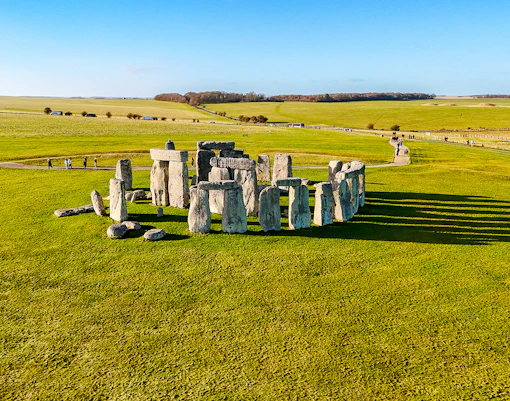
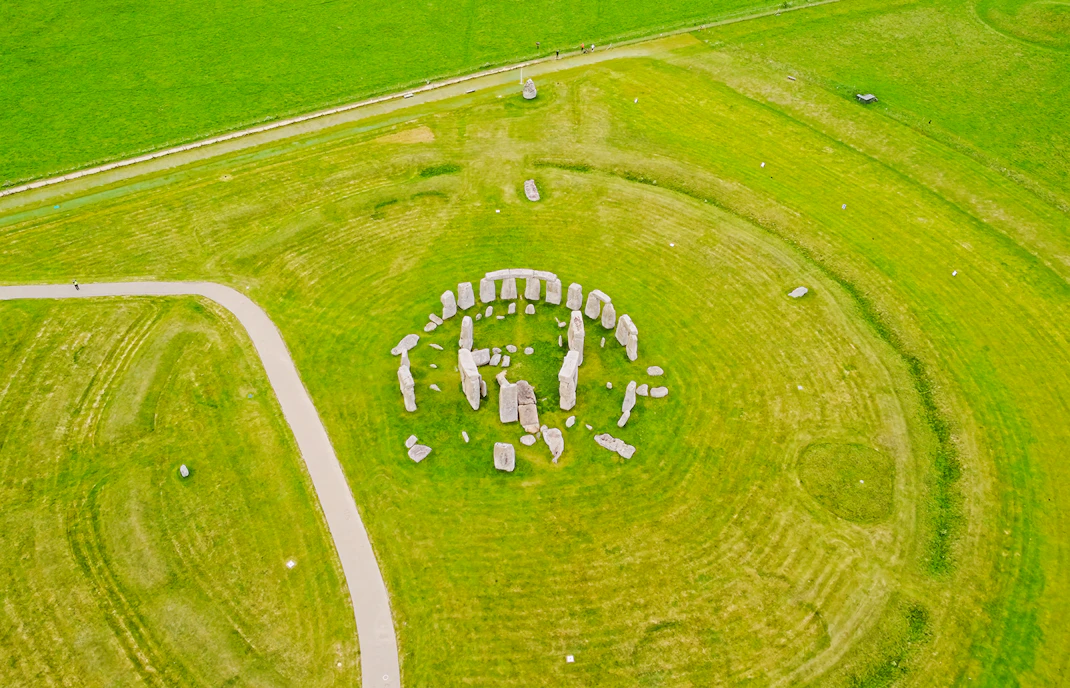
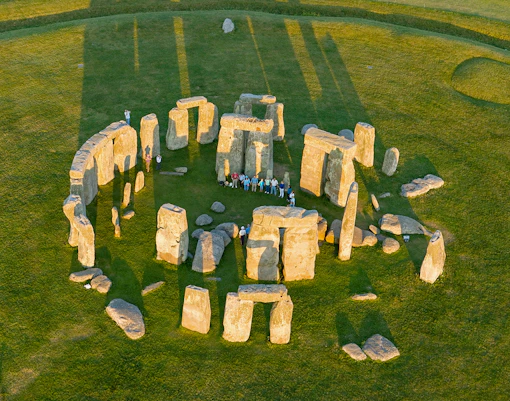
Aerial view of Stonehenge in Wiltshire, England, showcasing ancient stone circle.
1/5

Stone Circle

Era: Late Neolithic and Early Bronze Age

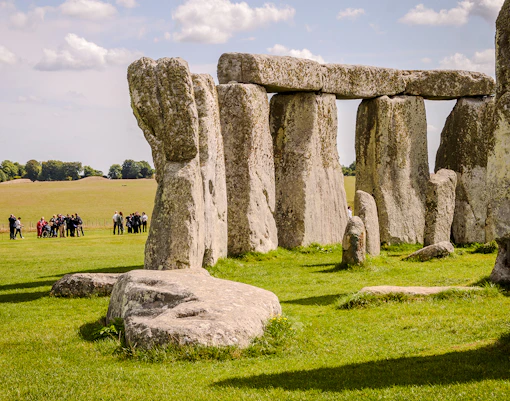
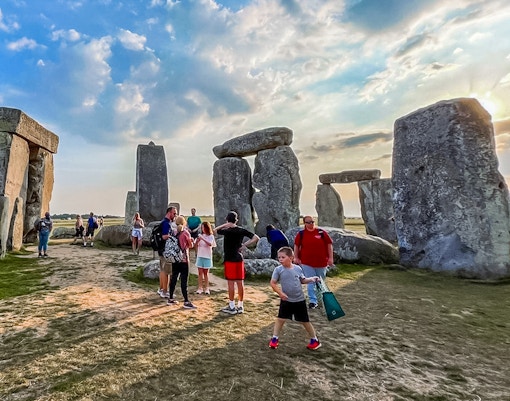
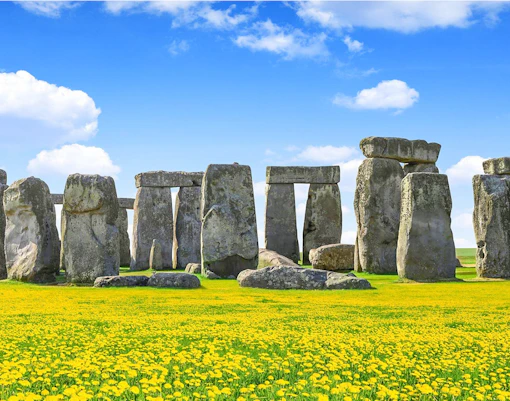
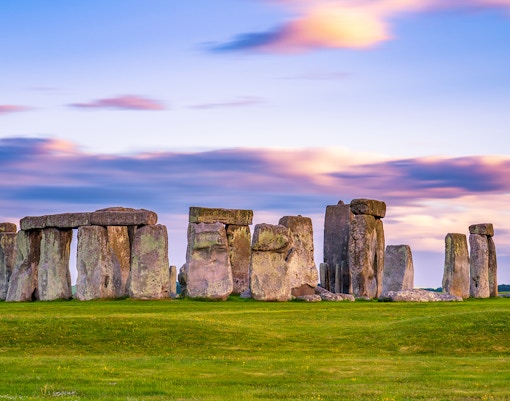
This is the reason most people come, and it still lands hardest when you first see the sarsens rising out of the plain. On a standard ticket, you're viewing from the managed perimeter path rather than walking among the stones, so slow down and notice the scale shifts as you move around the circle. What many visitors rush past is the difference between the larger sarsens and the smaller bluestones, which helps the monument feel less abstract.

Where to find it: At the end of the shuttle or walking approach, at the centre of the monument field route

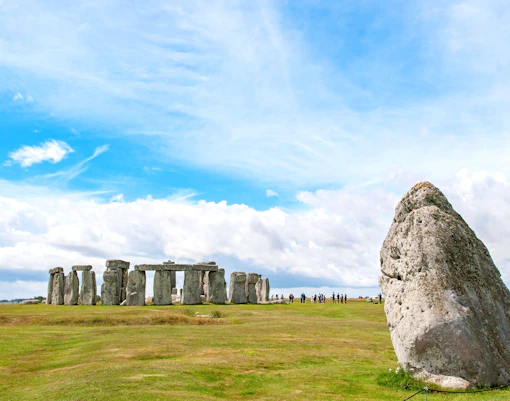
Heel Stone

Feature type: Outlying standing stone

The Heel Stone matters because it shows Stonehenge as part of a broader planned landscape, not just a ring of stones. It is especially worth slowing down for on the approach, when you can better understand how the outer features frame the monument. Many visitors treat it as scenery on the way in and miss how important it is to the site's alignment story.

Where to find it: On the approach to the main circle, just before the perimeter route fully opens around the monument

The Avenue

Feature type: Processional earthwork

The Avenue helps explain why the journey to Stonehenge matters almost as much as the circle itself. It carries the site out into the surrounding landscape and makes more sense if you resist the urge to race straight to the best photo angle. Most visitors focus only on the stones and miss that the wider earthwork is one of the clearest clues that Stonehenge was designed as a ceremonial setting, not an isolated object.

Where to find it: Extending away from the circle on the landscape approach side of the site

Neolithic Houses

Feature type: Reconstructed dwellings

These reconstructions do the job the stones alone cannot: they make the people behind the monument feel real. If you're visiting with children or anyone who finds the archaeology a little abstract, this is one of the best stops on site. Many visitors skip it because they head straight for the shuttle, then discover too late that the houses would have given the monument much more human context.

Where to find it: Near the visitor centre, before you shuttle or walk out to the stones

About the Neolithic Houses

Visitor centre exhibition

Feature type: Interpretation gallery

The exhibition is the part of the visit that turns Stonehenge from a famous silhouette into a story with objects, archaeology, and debate behind it. It is particularly useful if you are not on a guided tour, because the monument field itself is visually powerful but light on explanation. The easy thing to miss is that doing this after the stones often works better, because the objects make more sense once you've seen the scale of the site.

Where to find it: Inside the Stonehenge visitor centre

About the Visitor Centre
Most visitors skip the best context because they rush straight to the shuttle

The Neolithic Houses and the visitor centre exhibition are easy to miss because the crowd flow pulls people toward the monument first. If you have even 20-30 extra minutes, those two stops do the most to make the circle itself feel less remote.

Stonehenge festivals & events

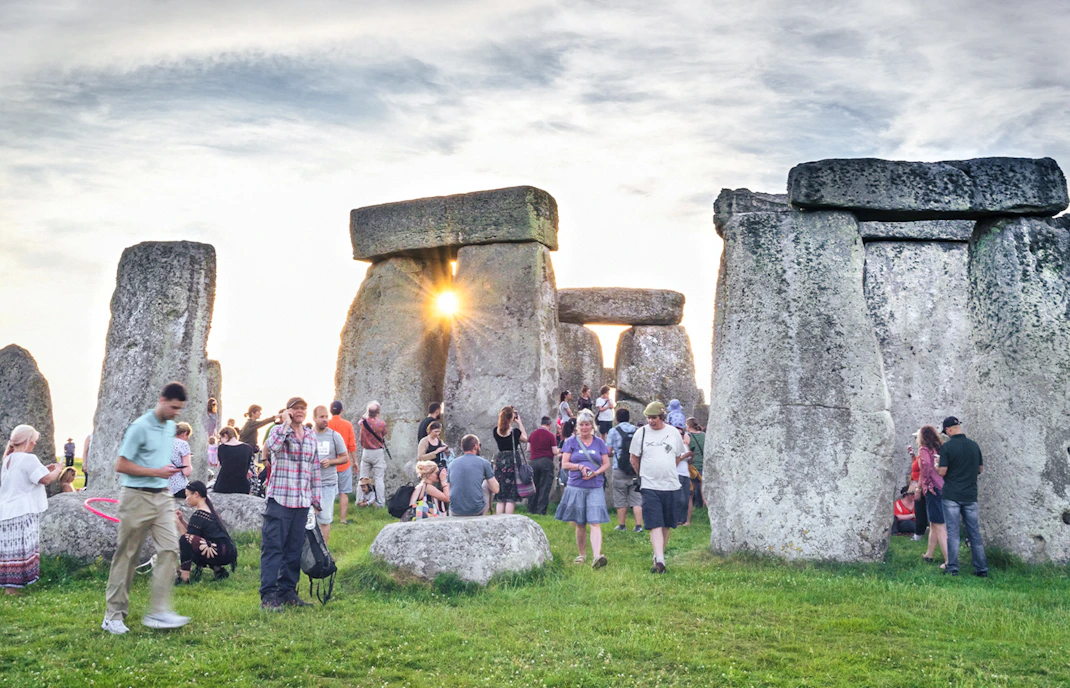
Stonehenge hosts several seasonal gatherings and events throughout the year, offering opportunities to see the monument tied to ancient astronomical alignments and interactive activities.

Key tips:

  • Access & tickets: Major solstices offer managed open access (free entry with limited facilities), whereas standard events require a general admission ticket.
  • Arrival & timing: Arrive 1.5 to 2 hours before sunrise for solstice/equinox events to navigate entry queues and shuttle schedules.
  • What to pack: Dress in sturdy, mud-resistant footwear and layers. Tripods, large bags, drones, and camping gear are strictly restricted on site.

Facilities and accessibility

  • 🎫 Admissions area: Check-in happens at the visitor centre, so sort tickets, audio guide, and timing before you set off toward the stones.
  • 🚻 Restrooms: Use the main visitor centre restrooms before boarding the shuttle or starting the walk, because the monument segment is more exposed and less forgiving.
  • 🍽️ Café: The visitor centre café is the practical food stop on site, and it works best before or after the monument rather than in the middle of your timed visit.
  • 🛍️ Gift shop/merchandise: The main shop is at the visitor centre and is most useful for guidebooks and archaeology-focused souvenirs, not for a quick mid-visit stop.
  • 🪑 Seating/rest areas: The visitor centre is the best place to sit and reset; once you're out on the monument side, the visit is much more about standing, walking, and weather tolerance.
  • 🅿️ Parking: Independent visits start at the visitor centre side, which is the practical base for parking before you begin the shuttle or walking approach.
  • Accessible shuttles: Electric, wheelchair-accessible shuttle buses run regularly between the visitor centre and the stone circle (~10-minute journey), helping visitors bypass the 1.5-mile (2.4 km) walk across open terrain.
  • Pathways: Paved and compact pathways link the parking area, visitor centre, shuttle stops, and viewing areas around the stones, making them suitable for wheelchairs, mobility scooters, and pushchairs. (Note: Grassy sections near the monument can become uneven or muddy after heavy rain).
  • 👁️ Visual impairments: The free audio guide adds useful context on a site where much of the experience is spatial and outdoors, so download it before arrival and bring your own headphones.
  • 🧠 Cognitive and sensory needs: The calmest visits are usually the first timed slots on quieter weekdays, while late-morning summer arrivals are the noisiest and most crowded because coach waves and shuttle demand peak together.
  • 👨‍👩‍👧 Families and strollers: The site works better with a shuttle-first plan if you're carrying gear or using a stroller, because the approach is long enough to become the hardest part of the day.
  • Amenities: Accessible restrooms with grab rails, accessible seating at the café, and low display counters in the gift shop.
  • Equipment: A limited number of wheelchairs are available to borrow at the visitor centre on a first-come, first-served basis (bringing your own mobility aid is recommended).
  • Rest areas: Benches are placed frequently across the grounds, alongside quiet areas for calm sensory breaks.
  • Visual & hearing: Registered assistance dogs are welcome site-wide. Free audio guides, tactile exhibits, printed interpretation panels, captioned video displays, and hearing loops are available.
  • Cognitive & learning: Simplified plain-language guides, clear intuitive signage, and low-stimulation quiet zones are provided, with staff trained to offer extra guidance.

Stonehenge works best for children who like big sights, open-air space, and short bursts of archaeology rather than all-day hands-on activity.

  • 🕐 Time: Around 1.5-2 hours is realistic with children, and the best priorities are the stones first, then the Neolithic Houses if attention is still good.
  • 🏠 Facilities: The visitor centre side is the family base for restrooms, food, and regrouping before or after the monument segment.
  • 💡 Engagement: Let children compare the reconstructed houses with the Stone Circle, because that usually makes the site feel more like a real place than a distant monument.
  • 🎒 Logistics: Bring layers, water, and anything you need for wind or sun, and skip bulky bags because the shuttle/walk transfer is part of the visit.
  • 📍 After your visit: If they still have energy, pair Stonehenge with a second stop only if it is close by, because long coach-style add-ons are usually where younger children hit their limit.

Rules and restrictions

Leaving the visitor centre mid-visit costs more time

⚠️ Plan restroom stops, snacks, and layers before you head out toward the monument. Once you're on the stone side, getting back to the visitor centre means another shuttle cycle or a 25-40 min walk each way.

Visitors at Stonehenge visitor center during London to Stonehenge and Bath day trip.

Practical tips

  • Booking and arrival: Book your timed slot ahead if you care about a specific window, because prebooking is the only way to guarantee your chosen day and time at Stonehenge.
  • Pacing: Save your attention for the first full view of the circle and the walk around it, then use the exhibition on the way back when the archaeology will make more sense.
  • Crowd management: If you're staying in London, choose a direct Stonehenge trip over a multi-stop coach day when the site itself matters more to you than ticking off Windsor or Bath.
  • What to bring or leave behind: Pack for weather, not just for photos, because the approach and viewing route are open-air and a bulky bag adds nothing once you leave the visitor centre.
  • Food and drink: Eat before or after the monument segment rather than between transfer legs, because the visitor centre is the natural stop and breaking the route in the middle usually wastes time.
  • Route choice: If conditions are good, walk one way and shuttle the other, because you get the calmer landscape buildup without committing to the full round-trip on foot.
  • Upgrade logic: Inner-circle access is worth considering only if standard perimeter viewing sounds too distant for the kind of Stonehenge trip you want, because it is one of the few upgrades that genuinely changes the experience.

What else is worth visiting nearby?

Eat, shop and stay near Stonehenge

  • On-site: Stonehenge Café at the visitor centre serves a practical pre-visit or post-visit meal, and it is better treated as a convenience stop than the reason you linger.
  • Solstice Bar & Grill (about 10 min drive, High Street, Amesbury): British mains and an easy sit-down option if you want a proper meal after the site.
  • Reeve the Baker (about 10 min drive, Salisbury Street, Amesbury): Pastries, sandwiches, and quick coffee, which makes it the most useful short stop if you are driving onward.
  • George Hotel restaurant (about 10 min drive, High Street, Amesbury): A slower, more traditional lunch stop if you want to reset after the exposed walk and shuttle rhythm of Stonehenge.

💡 Pro tip: Eat either before your timed slot or after you're fully back at the visitor centre, because trying to squeeze food into the middle of the monument segment usually just adds another transfer.

  • Stonehenge gift shop: The most useful place to shop on-site for guidebooks, archaeology-focused gifts, and English Heritage merchandise, all at the visitor centre.
  • Salisbury Museum shop: Better than a standard souvenir stop if you want books or gifts with more local and archaeological depth after your visit.

Staying right beside Stonehenge only makes sense if you're driving and want the lightest possible logistics. For most travellers, the site is too isolated to be the best overnight base on its own. Salisbury is usually the smarter choice because it gives you restaurants, rail links, and another worthwhile historic stop, while Amesbury works if convenience matters more than atmosphere.

  • Price point: The immediate area is generally quieter and more practical than central-city style, with Salisbury offering the broadest range of mid-range stays.
  • Best for: Travellers with a car, early next-day plans, or anyone who wants to visit Stonehenge without turning it into a same-day return from London.
  • Consider instead: Salisbury for a more rounded stay, or Bath if you want a stronger city base and are happy to treat Stonehenge as a day trip by road or coach.

Frequently asked questions about visiting Stonehenge

Most visits take around 1.5-2 hours. That includes the visitor centre, the shuttle or walk out to the monument, the perimeter path, and the return. Give yourself closer to 2.5 hours if you want the exhibition, the Neolithic Houses, or the full landscape walk rather than a shuttle-heavy visit.

More reads